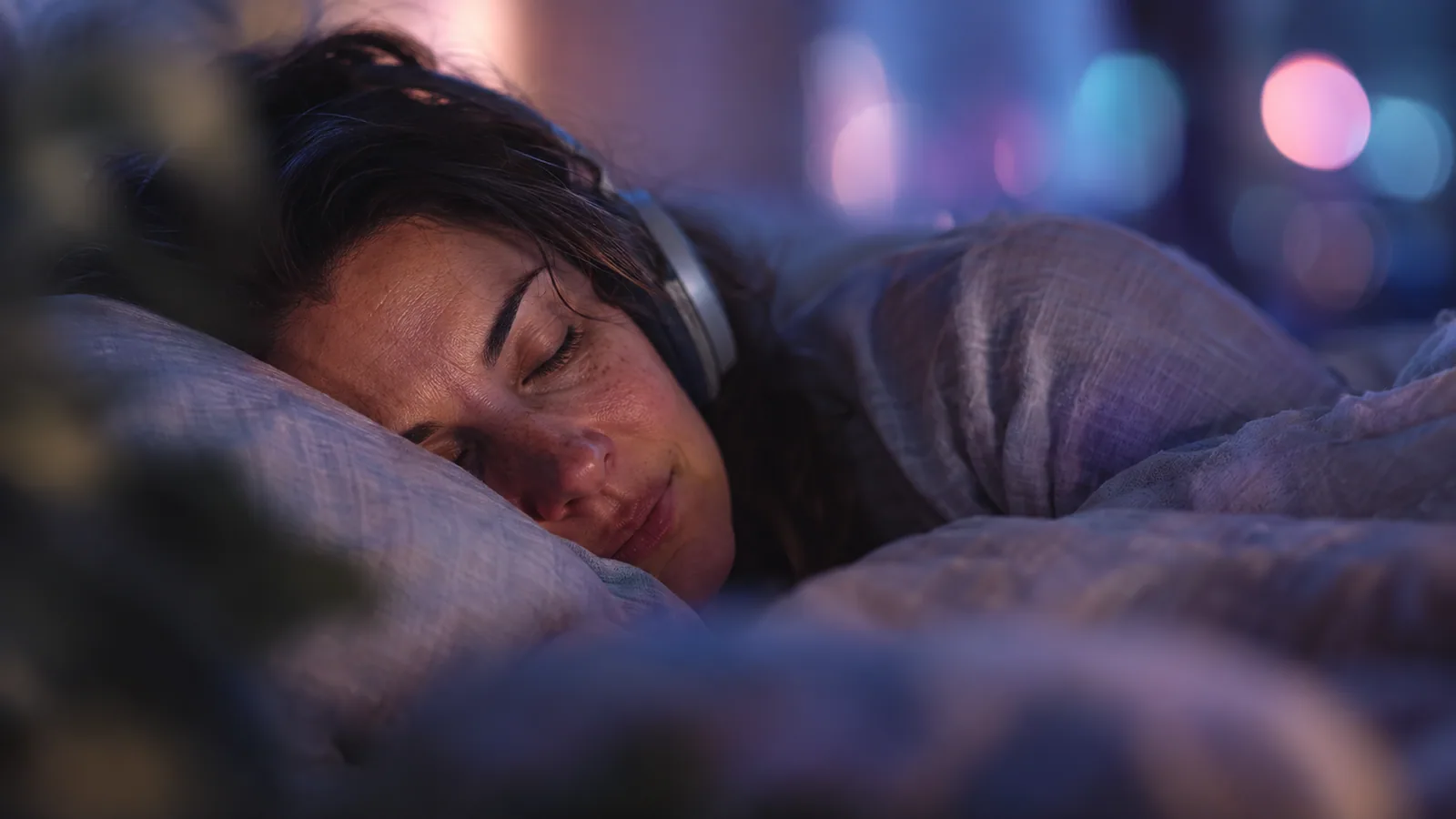

The phrase 'benefits of storytelling' often leads to advice about presentations, teaching or selling a product. Those uses have their place, but this is about something more personal: being an adult who still enjoys entering a story. Listening to a voice describe a place, meeting a fictional person and caring what happens next can be valuable without serving a business goal.
Stories can offer enjoyment, imaginative space and a subject to share with someone else. Research explores questions about fiction and social understanding too, although those findings are more limited than claims that stories automatically make us kinder or healthier. We can appreciate the experience without asking it to carry promises it can't support.
Being read to doesn't have to end with childhood
Adults are allowed to enjoy a familiar voice and an invented world. That doesn't mean pretending to be a child or giving up on difficult realities. You might want a complex novel during the day and a gentler story at night, just as you might enjoy different kinds of music in different settings.
Listening can also change the practical experience. Your hands can be free, your eyes can rest from a page and you can follow the narrator's pace. Those features may suit some people and not others. Someone who prefers rereading a sentence or moving quickly through description may choose text instead. Neither format needs to win.
Lumi grew from this question: why should the pleasure of having a story read to you disappear when you become an adult? The answer isn't that adults need to escape adulthood entirely. It's that wonder, tenderness and imaginative company don't have an age limit. A story can sit beside adult responsibilities without denying them.
A few chosen details leave room for your own world
A storyteller might describe a red door at the end of a narrow street. You supply the shade of red, the sound of your footsteps and whatever you imagine waiting beyond it. Another listener may picture something completely different. The words offer a shared starting point without requiring identical inner experiences.
That room for interpretation matters to Lumi. Some mysterious figures are deliberately left without definitive visual portraits, so the listener isn't required to exchange their imagined version for someone else's. Illustrations can establish a mood or landscape while leaving the nature of a character open.
You don't need clear mental pictures for a story to engage you. You may follow its language, rhythm, sounds or emotional shape instead. If someone asks you to visualise a scene and nothing like a photograph appears, that doesn't mean you're listening incorrectly. There are many ways to understand what a story is inviting you to consider.
Fiction can put a familiar feeling at a different distance
A story about a small star afraid to sing can be recognisable without naming a difficult meeting, a creative rejection or the fear of being overlooked. The distance gives the listener choices. You might connect it to your own life, think about someone else or simply enjoy the star's journey.
This is an interpretation of what a story can offer, not proof that metaphor treats anxiety. Fiction sometimes feels comforting and sometimes doesn't. A theme that seems gentle to one person may be painful for another, especially around loss, loneliness or family relationships. Clear descriptions and the freedom to stop are more useful than insisting a story is universally soothing.
A good emotional connection also doesn't require an explicit moral after every scene. A character's hesitation, a decision to stay or an ordinary act of care can be enough. The listener can notice what matters to them rather than being told exactly what lesson to take away.
Research on fiction and empathy is interesting, but modest
A meta-analysis by David Dodell-Feder and Diana Tamir combined experimental studies of fiction reading and found a small average improvement on social-cognitive tasks compared with comparison conditions. The authors called for more work on whether those effects transfer into real-world social functioning. A result on a research task isn't the same as becoming a more caring friend or colleague.
Experiments by Matthijs Bal and Martijn Veltkamp also explored how emotional involvement in fiction related to changes in measured empathy. Their findings varied with engagement. That helps explain why it's too broad to say that any story, consumed in any way, has a predictable effect on everyone.
These studies concern particular reading conditions and measures. They don't establish that a Lumi episode improves empathy, nor do they justify borrowing medical claims for an audio story. For an individual listener, the immediate value may be more straightforward: the character held your attention, the language moved you or you enjoyed spending time in the world.
Stories can become something to talk about
A shared story gives people a third thing to discuss. Instead of beginning with a direct question about a difficult feeling, you might ask why a character made a choice or which scene stayed with someone. That can open a conversation, but it doesn't have to become personal. The other person may only want to talk about the plot.
Allow disagreement. A character you find wise may seem irritating to someone else. An ending you find hopeful may feel unresolved to them. Different reactions don't mean one listener failed to understand. They can reveal which details each person noticed and what they brought to the experience.
If you recommend a story about a sensitive subject, explain the theme rather than assuming it will help. 'This involves bereavement; would you like the link?' gives someone a choice. Sending a story as an indirect instruction about how they should feel can make the recommendation burdensome, even when your intention is kind.
Choose the experience you want this evening
Start with the kind of attention you have available. If you want to follow every detail, choose a story and a setting that make that enjoyable. If you're winding down, you may prefer a familiar episode or a gentler plot. There is no need to challenge yourself with the most demanding narrative at the end of an exhausting day.
Sound matters too. A narrator's pace, background music and sudden changes can affect whether you enjoy listening. Check an episode description and sample the opening at a comfortable volume before settling in. If a particular voice or score doesn't suit you, that is a preference, not evidence that you're bad at relaxing.
You can stop before the ending, return tomorrow or choose silence. Stories aren't a test that you pass by remaining attentive. For bedtime listening, the aim isn't to track every sentence or prove that an episode made you sleep. Persistent sleep difficulties call for appropriate advice rather than increasingly strict listening routines.
Finding a voice is one place to begin
Lumi: The Star That Found Her Voice centres on a star who hesitates to join the others because she fears she won't be heard. Its imagined scale makes an ordinary worry feel newly visible. The story gave the series its name, but you don't need to know a larger mythology before listening.
If it speaks to you, follow the feeling rather than looking for the correct interpretation. If another story interests you more, start there. The point of keeping stories in adult life isn't to collect their supposed benefits. It's to keep a door open to experiences that can be beautiful, absorbing, unsettling, comforting or simply worth your time.
Sources
Questions
Does listening to fiction make everyone more empathetic?
No. Research findings are limited by the activities, populations and measures studied. They don't establish a guaranteed change in real-world behaviour or an effect for Lumi.
Is Lumi a therapy programme?
No. Dreaming with Lumi provides fictional stories and entertainment. Enjoying an episode can be part of an evening, but it doesn't replace medical or mental-health support.