
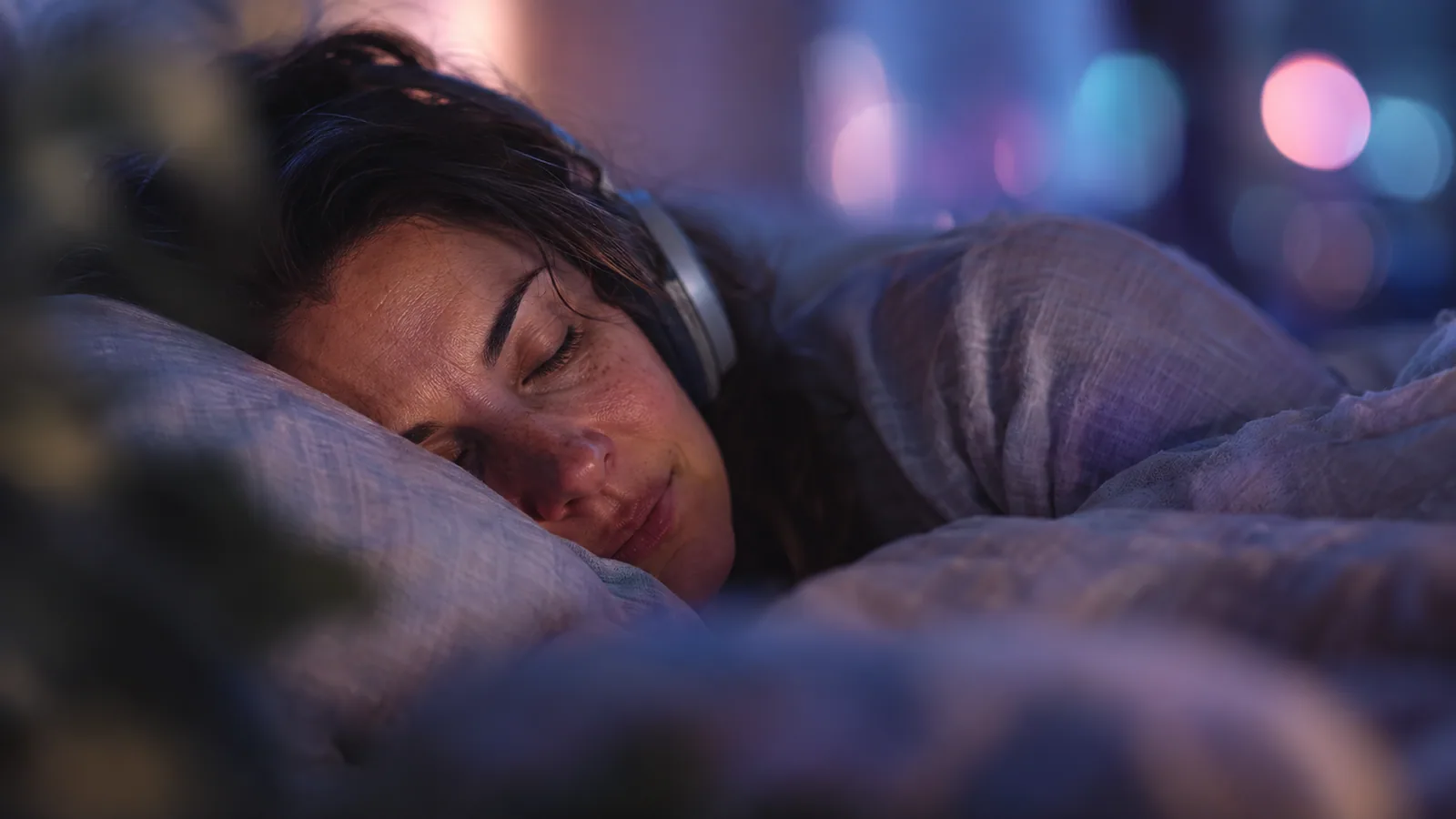
Sometimes you don't want another series to keep up with. You want a doorway: a voice, a place you've never been, and a story that carries you somewhere other than tomorrow's to-do list. Short bedtime stories for adults offer that without asking you to remember a complicated plot across several evenings.
Short is relative, though. A five-minute reading and a seventeen-minute episode aren't the same commitment. Lumi's existing story editions commonly run for fifteen or seventeen minutes, so this isn't a collection of supposedly ten-minute recordings that turn out to be longer. It's a guide to choosing a compact, complete listening experience, with honest lengths and room for your preferences.
Choose the length you actually have
Before choosing a title, decide what you mean by short tonight. Do you have a few minutes while getting ready for bed, a quarter of an hour to yourself, or a longer stretch where you don't mind drifting in and out? Answering that first can prevent an innocent search from becoming twenty minutes of browsing.
The imported Lumi podcast feed lists The Dreaming Gallery, The Endless Day and Through the Storm at fifteen minutes each. Lumi, The Star That Found Her Voice and Luna's Secret Garden are listed at seventeen minutes. Those are full episode lengths, not a claim that narration runs continuously throughout them. Check your player too, because the edition you open matters.
If you specifically want a five- or ten-minute listen, don't treat those episodes as exact matches. You can listen to part of a longer story, return another night, or choose a shorter reading elsewhere. There isn't a rule that you must reach the ending for the time to count. A useful bedtime choice should fit your evening, rather than quietly expanding it.
Story version or relaxation version?
Lumi has used two episode formats. Story versions place the narrative at the centre, with music, a closing reflection and a musical ending. Relaxation versions add a relaxation introduction and a longer background-sound ending. Look at the edition label and displayed duration instead of assuming two recordings with the same story title will play for the same time.
Choose a story version when you want the whole narrative in a relatively compact window. A relaxation edition may suit an evening when you want a longer transition, but longer isn't automatically better. Some people prefer words, some want music after the words, and some would rather have silence. Those are preferences, not measures of how seriously you're taking rest.
It's worth making this decision before settling down. Opening a different edition midway through can mean another introduction, another volume adjustment and another look at the screen. Save the version you want during the day if you can. The point is to remove a little decision-making, not to create an elaborate listening ritual that you then have to maintain.
Three different doors into Lumi
For a story about finding your voice, begin with Lumi, The Star That Found Her Voice. Its opening places a small, shy star among others who seem to shine more confidently. The emotional question isn't how to become the biggest presence in the sky; it's whether a voice that feels small still belongs there. The existing story edition is listed at seventeen minutes.
For creative wonder, The Dreaming Gallery offers a different atmosphere. Its opening imagines a gallery far away in the universe, filled with extraordinary works of art. If an impossible building, a strange object or the suggestion of another world draws you in more than a familiar domestic setting, this fifteen-minute story is a natural place to begin. You don't need a map of the wider Lumi universe first.
For the feeling of always moving towards the next thing, consider The Endless Day. Its central character begins with a crowded calendar and a mind occupied by plans and tasks. That's an emotional starting point, not a clinical explanation of stress. The fifteen-minute story offers imaginative distance from a recognisable habit: treating every quiet moment as space that ought to be filled.
Match the atmosphere, not just the theme
A title about comfort won't necessarily feel comforting to every listener. One person finds a rainstorm enveloping; another finds it unsettling. Space can feel spacious or lonely. A garden can evoke safety, grief or a particular memory. Read the opening or synopsis and notice your own response before choosing by the emotion printed in a recommendation.
Lumi's worlds aren't uniformly cheerful. They can include sadness, uncertainty, loss and questions about meaning. That emotional depth is part of the storytelling, but you don't have to choose the heaviest story at the end of a difficult day. Save an episode that feels too close to something you're carrying. A daytime listen is still a perfectly good way to discover it.
For the same reason, a favourite you've already heard may suit bedtime better than a new release. Knowing the ending can let you enjoy individual details without needing to follow every turn. Repetition doesn't mean you've run out of curiosity. You might simply want the company of a familiar place tonight and a new doorway tomorrow.
Make the listening simple
Start at a comfortable, low volume and check the opening before putting the screen away. You should be able to hear the narration without turning the whole room into a performance space. If headphones make lying down awkward, a speaker may be a better choice. Consider anyone sharing the room; a lovely recording doesn't cancel out their need for quiet.
A sleep timer can stop playback after your chosen interval or at a track or episode ending where your player offers that option. Spotify documents its own timer, but controls can vary by device and app version. Check the timer while you're still comfortable using the screen. Don't assume the player will stop simply because the story you've chosen is short.
If you're reading rather than listening, pick a natural stopping point and let paragraphs breathe. You don't need to race through a story to earn its ending. Some evenings the nicest detail may be a single room, a line of dialogue or an image that stays with you. Reading aloud to someone else is another option, provided it's enjoyable for both of you.
Try one story, without making it a test
Choose one episode, not a whole improvement programme. You might try The Dreaming Gallery for its sense of possibility, or Lumi's first story for its quieter question about belonging. Browse the story library, open your preferred platform, and check that you've selected the edition you intended. Then give the story a little space before deciding whether it suits you.
There's no need to judge the experience by whether you fall asleep before the final sentence. These are imaginative stories intended for winding down, not a treatment or a promise of a particular night's sleep. If listening keeps you interested and awake, enjoy it earlier. If ongoing sleep difficulties are affecting your life, seek qualified advice rather than asking a podcast to do everything.
The invitation is smaller and, perhaps, nicer than that: spend a little time somewhere beautiful. Let someone else carry the narrative for a while. You can stay for the whole journey, leave halfway through, or return to the same doorway whenever it feels like somewhere you'd like to be.
Sources
Questions
Are Lumi stories exactly ten minutes long?
Not the existing editions highlighted here. The imported feed lists their full lengths as fifteen or seventeen minutes. Check the duration and version in your player.
Do I need to listen to Lumi in order?
You can begin with an individual story. Some characters and themes recur, but you don't need to study the wider universe before choosing an episode.